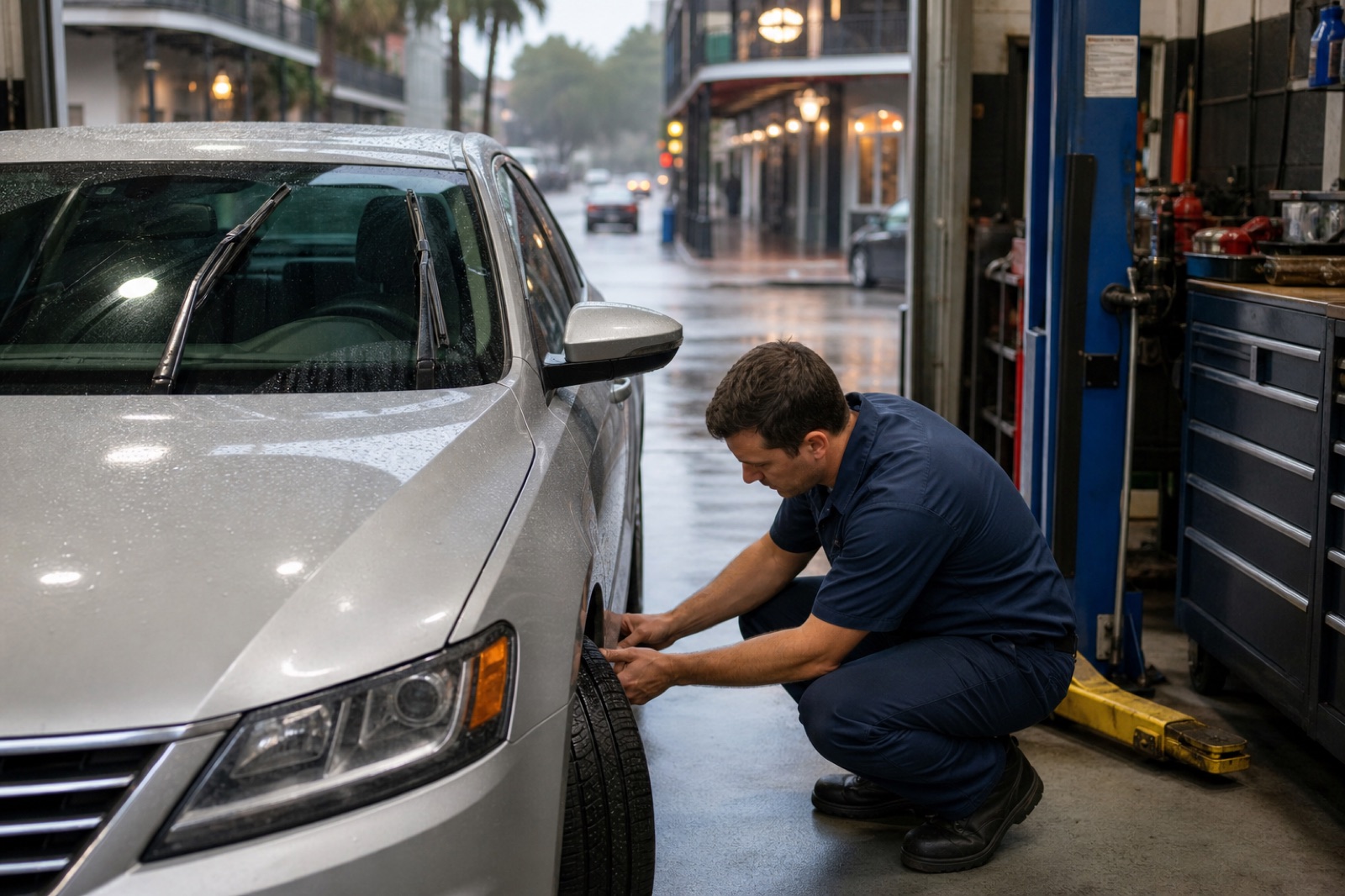
Heavy Gulf Coast rain can turn an ordinary commute into a low-visibility, low-traction drive. A short inspection cannot control the weather, but it can remove common vehicle problems that make wet roads more dangerous.
1. Tires: your grip on wet pavement
Water must escape through tread channels. Low tread, incorrect pressure, and visible damage reduce the tire’s ability to maintain contact. Check pressure cold using the driver-door placard, then inspect for uneven wear, cracks, bulges, or objects.
2. Wipers and washer fluid
Replace blades that streak, chatter, skip, split, or leave a haze. Clean the glass and blade edges, then fill the washer reservoir with the proper washer fluid. Water alone does not clean oil film and road grime as effectively.
3. Headlights, brake lights, and signals
Lights help you see and help other drivers locate you in spray. Test low beams, high beams, brake lamps, taillights, and turn signals. Cloudy lenses and dead bulbs become more noticeable in rain.
4. Brakes
Squealing, grinding, vibration, pulling, a soft pedal, or increased stopping distance deserves attention. Wet roads already lengthen stopping space, so do not wait for worn brakes to become urgent.
5. Battery and electrical condition
Summer heat can weaken batteries before drivers notice a slow start. Rain also increases electrical demand through wipers, lights, and climate control. Inspect for corrosion, loose connections, and signs of a tired battery.
6. Fluids and under-hood checks
Check engine oil, coolant reservoir level when the engine is cool, brake fluid condition, and washer fluid. Look for damaged hoses and fresh leaks. Use only the type specified for the vehicle; never open a hot cooling system.
Do not enter water when depth, current, or pavement condition is uncertain. Water can hide missing road, stall the engine, disable brakes, or sweep a vehicle away. Choose another route and follow local safety guidance.
Wet-weather driving habits still matter
- Slow down smoothly and leave extra following distance.
- Avoid cruise control in heavy rain or standing water.
- Use headlights as required; do not rely only on daytime running lights.
- Avoid sudden steering, braking, and acceleration.
- If traction is lost, ease off inputs and steer smoothly rather than making abrupt corrections.
Get a quick pre-rain check
Read Oil Change & Tires can check oil, tire pressure, filters, battery condition, lights, wipers, fluids, and hoses during service. Visit 7007 Read Blvd in New Orleans East—no appointment needed.