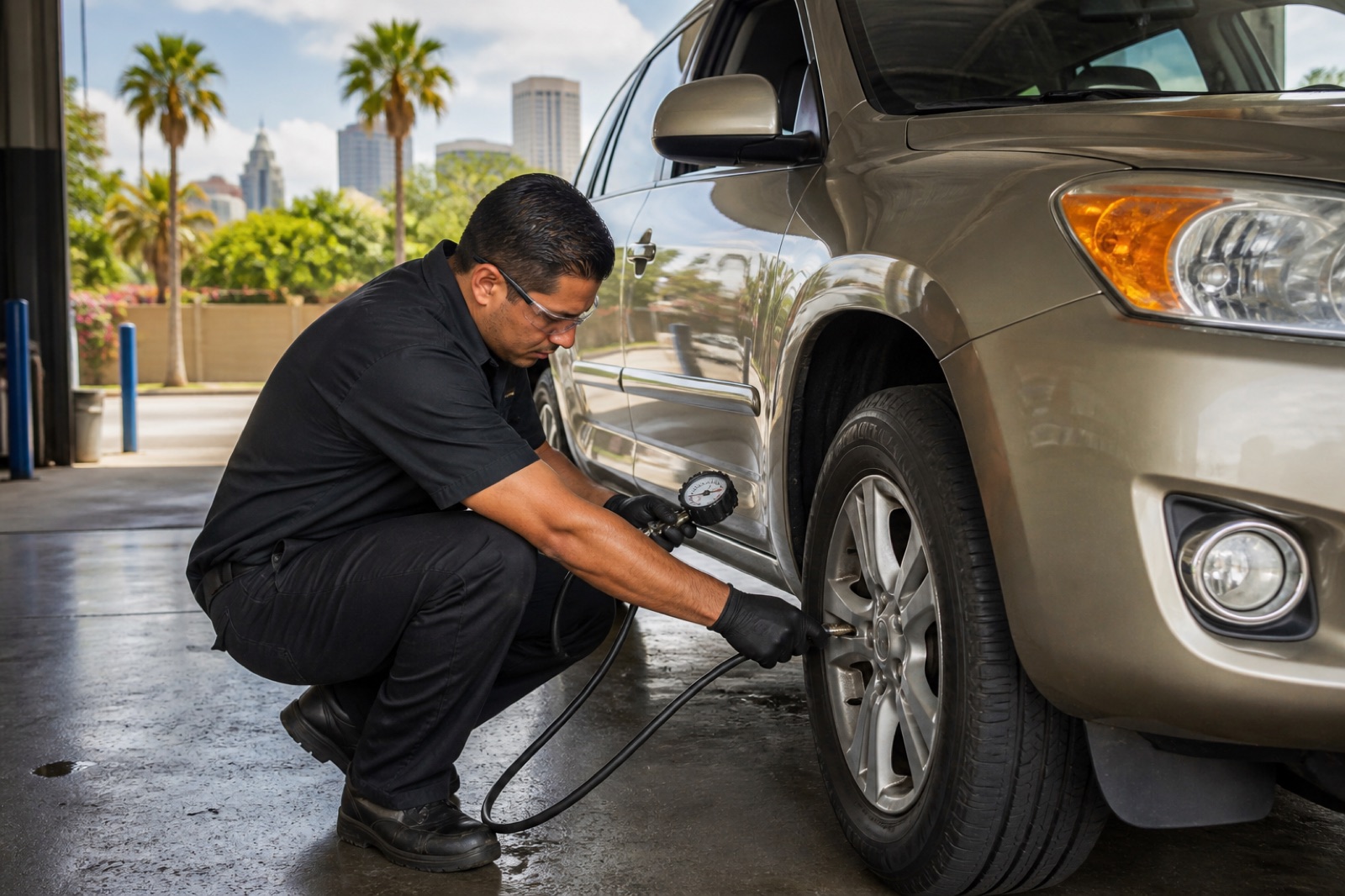
Tires support the full weight of your vehicle on contact patches about the size of your hands. Correct pressure affects braking, steering, heat buildup, tread wear, and fuel use—especially on hot Gulf Coast pavement.
Which PSI number should you use?
Open the driver’s door and find the tire-information placard on the door jamb. It lists the vehicle manufacturer’s recommended cold tire pressure for the front and rear tires. The number on the tire sidewall is generally a maximum rating, not the everyday target for your vehicle.
Why pressure rises after driving
Air warms as the tire flexes and rolls, so a hot reading is naturally higher. Do not bleed a warm tire down to the cold placard value; it may become underinflated once it cools. Check before driving or after the vehicle has been parked long enough for the tires to cool.
| Situation | Best action |
|---|---|
| Monthly routine check | Measure all four tires cold and use door-placard PSI |
| Large temperature change | Recheck when cold; adjust if needed |
| Light turns on while driving | Slow down, inspect safely, and check for a puncture |
| Repeated pressure loss | Have the tire, valve, and wheel inspected |
Heat does not justify overinflating
New Orleans heat raises operating pressure, but manufacturers account for normal warming. Adding extra air “for the heat” can reduce the contact patch, change ride and handling, and create uneven center wear. Start with the placard specification when cold.
A bulge, exposed cord, deep crack, embedded object, or rapidly deflating tire needs prompt professional attention. Do not rely on adding air to make structural damage safe.
What the tire-pressure light means
The TPMS warning generally means one or more tires are significantly below the expected pressure, though a sensor fault is also possible. Check all four tires with a reliable gauge. Some vehicles also monitor the spare. If a tire is very low or losing pressure, avoid high-speed driving.
Pair pressure checks with tread inspection
Correct PSI cannot compensate for worn tread. Check for uneven shoulders, center wear, cuts, and low tread depth. Uneven wear may point to pressure, alignment, suspension, or rotation issues.
Free pressure check with service
Read Oil Change & Tires checks tire pressure as part of service at 7007 Read Blvd. If you are unsure about the placard number or a warning light, pull in during business hours—no appointment needed.